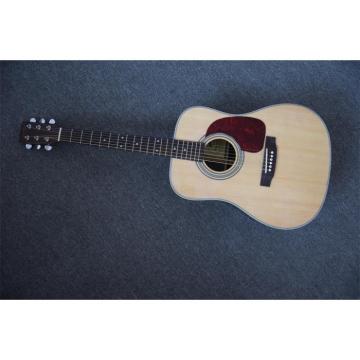
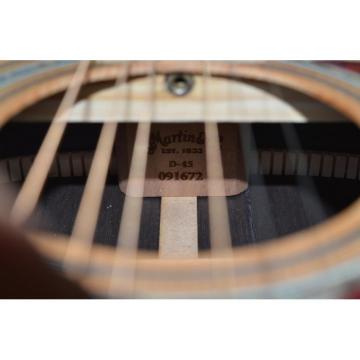
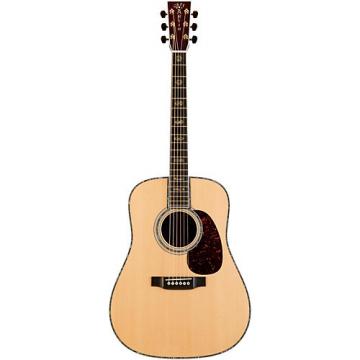
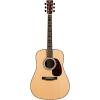
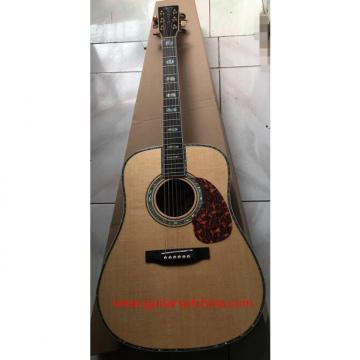
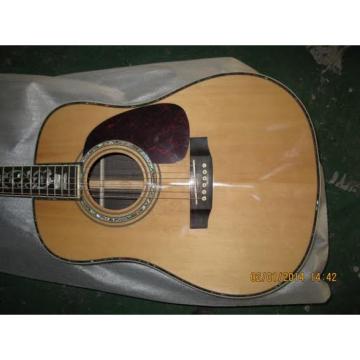
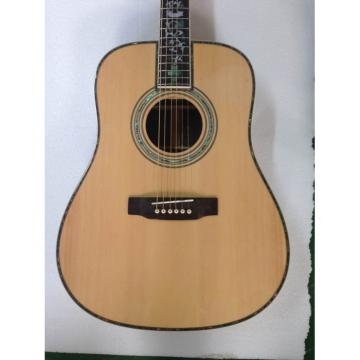
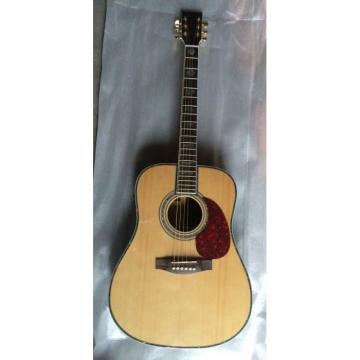
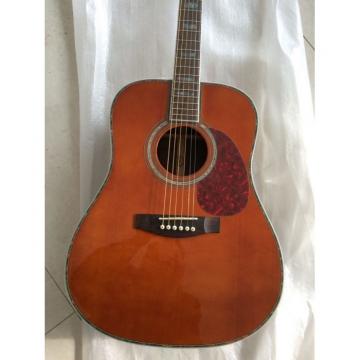
Martin has put more than 900 individual pieces of abalone into the bindings and inlays of the top, sides, back, and rosette of the D-46 Dreadnought Acoutic Guitar. Large 'C.F. Martin' abalone letters adorn the headstock; abalone hexagon inlays are used as position markers on the bound ebony fingerboard. Solid spruce top and traditional Martin bracing pattern generate fantastic tone from this beautiful guitar. Features rich solid rosewood sides and 2-piece back. Limited lifetime warranty. The D-45 Dreadnought includes a deluxe Martin hardshell case ($190 value).
900-piece abalone bindings and inlays
Abalone logo on headstock
Bound ebony fretboard
Rosewood sides and 2-piece back
Custom Guitar's Friend Gold Coverage
Gold Coverage goes above and beyond the manufacturer's warranty to protect your gear from unexpected breakdowns, accidental damage from handling
and failures. This plan covers your product for one, two, three or up to five years from your date of purchase, costs just pennies per day and gives you a
complete "no-worry" solution for protecting your investment.
Gold Coverage Includes:
Unexpected and unintentional spills, drops and cracks
Normal wear and tear
Power surges
Dust, internal heat and humidity
Other plan features include:
For products over $200, No Lemon Policy applies. If it fails for the same defect 3 times, it is replaced on the 4th breakdown. (Does not apply to failures due to drops, spills, and cracks)
For products under $200 experiencing the above failures, a Custom Guitar's Friend gift card will be issued for the full price of the product + tax.
Shipping fees covered if required for repair or replacement
Plans are transferable in the event merchandise is sold
Plans are renewable on new gear
*Limitations and exclusions apply. See terms and conditions for program details
Term for New Gear begins on date of purchase but does not replace the store return policy or manufacturer coverage.
Displaying reviews 1-10
Back to top
PreviousNext »
Just fantastic
Well, how do I make this clear. First of all, an acoustic guitar is really just a mirror made out of wood;l in other words, whatever you can do, IT will do. I've been playing almost 30 years and can tell you that learning to play steel-string is an EVOLUTION. An evolution of your taste, your ability, but also it's a continued undestanding of what makes a guitar sing: Voicings and strings. Without all these things you cannot evolve.
What a martin brings to the table (ESP the D-45) is the vehicle to make these expressions in my opoinion. For example, I play the same thing on 2 guitars and one of them is a D-45 -- THAT is where we should begin the review, a comparison to a baseline variable.
I've owned both old klunkers and nice steel string guitars. But it wasn't until late '07 that I had the dough to lay down on a Marty. I went with a D-42 for econ reasons (about 3400.00 at that time). She was a beut' ... However, a few years later I went into the shop and test drove a new D-4 and let me tell you there was just NO comparison there.... NONE.
The D-45, when put together correctly and set to go is about as close to driving a Ferarri Enzo as a working-class guitarist can ever get. She was so fast, and so bright, big, and loud it was jaw-dropping -- not only for me, but for several others in the sound room, no kindding.
I decided right then and there I would lay down the money to get her. And only this particular one, too. Each one is different. YOU MUST SHOP and COMPARE.
This is the nicest guitar I've ever played in my life..... Endless enjoyment is hard to put a price on.
Martin Standard Series D-45 Dreadnought Acoustic Guitar
.bought this guitar in 1985 every thing is great about this guitsr except after a few years the finish started comming off in pieses contacted martin. they said finish was only garinteed for one year only.so much for thair lifetime garintee .i realy babied this guitar i will never buy another martin guitar
Martin Standard Series D-45 Dreadnought Acoustic Guitar
.Take a Martin D-41 and add about $3,000 dollars to the price... and you have a D-41 with more abalone which is now transformed into a D-45.Save your money - buy the D-41. You won't be able to tell the difference in a blindfold test between the 2 guitars.
Martin Standard Series D-45 Dreadnought Acoustic Guitar
.I own a 1962 Martin D-45, yes it's 48 years old...and sounds much better today than it did when I first purchased in in 1975. With over 4 decades of playing many, many acoustics, my experience has taught me that hand-built acoustics by master luthiers is the way to go. But even though Martin is a production-line guitar, the D-45 is the standard by which all other acoustic guitars are measured. Some have said the D-45 sounds the same as a D-41 or D-42, just with more abalone. That is simply not true. One has to have an experienced, practiced ear, but the D-45 is different from the D-41 or D-42. Especially with vintage age, the sound is huge, the projection is unmatched and the sweet, sweet tone cannot be touched even by most hand-built guitars. I've played a few hand builds that sound better, but they cost over $20,000.00. So the Martin D-45 is quite a steal at this price. Don't bother with D-45V vintage re-make. The plain D-45 is the same guitar without the vintage finish, and besides your new D-45 will develop that same vintage finish over time anyway, just be patient. If you buy this guitar, plan on owning it the rest of your life and passing it on to your children as an heirloom.
Martin Standard Series D-45 Dreadnought Acoustic Guitar
.Sounds that make you situp and take notice!I play by ear,and this D-45 sounds better than my HD-28 my D-35 and my Taylor 910LT which is very pretty but not even close to the sound of my Martin D-45 I have owned it a long enough time to know, and it is still getting better!If you want a really unique sounding guitar, and can spend the money, I recomend the Martin D-45 as the way to go!
Martin Standard Series D-45 Dreadnought Acoustic Guitar
.You recognise the sound as soon as you play it. Balance between the strings, oustanding solo or rhythm sound. Ease of playing. Always a joy to play and hear. What more can a guitar player want?
Martin Standard Series D-45 Dreadnought Acoustic Guitar
.GREAT Guitar, I bought mine used, a 1991 model. There is a reason for the high price. The quality of material and workmanship are unmatched.I trade a LOT of guitars. I have never seen any guitar to try to compare a Martin D45 with. Taylors, Gibsons, don't come close in my opinion.. LOVE this guitar.
Martin Standard Series D-45 Dreadnought Acoustic Guitar
.The Martin D5 is the best guitar I've ever played hands down in 11 years of playing. I'm amazed at the quality and tone, and the feel of this dream instrument. Martin has a legendary history and the d45 exemlifies the best Martin has to offer. I satdown with this instrument a d played and the high tones were incredible. I want this guitar. Martin, you have my seal of approvel.
Martin Standard Series D-45 Dreadnought Acoustic Guitar
.I own a taylor 914ce, and it is a great pro quality guitar. But this is something special. In my mind taylor has martin beat until you get past the martin d42. You sure do get what you pay for with this baby, with beautiful crisp highs and deep lows. Martins just get better sounding with time.
Martin Standard Series D-45 Dreadnought Acoustic Guitar
.This is one of 3 Martins I own. And By far the one I play the most. Not only is it a pleasure to play and listen to, but also one beautiful looking piece of art!
Martin Standard Series D-45 Dreadnought Acoustic Guitar
.
 English